
Avvio is a money app built by bitcoiners for the people Wise blocked, held, or debanked. Get paid in USD, EUR, or GBP, anywhere. We never hold your funds, so no one can freeze them.



Wise details are quoted from Wise's own published pages, checked July 2026: its Acceptable Use Policy and help centre. Wise can change them at any time.
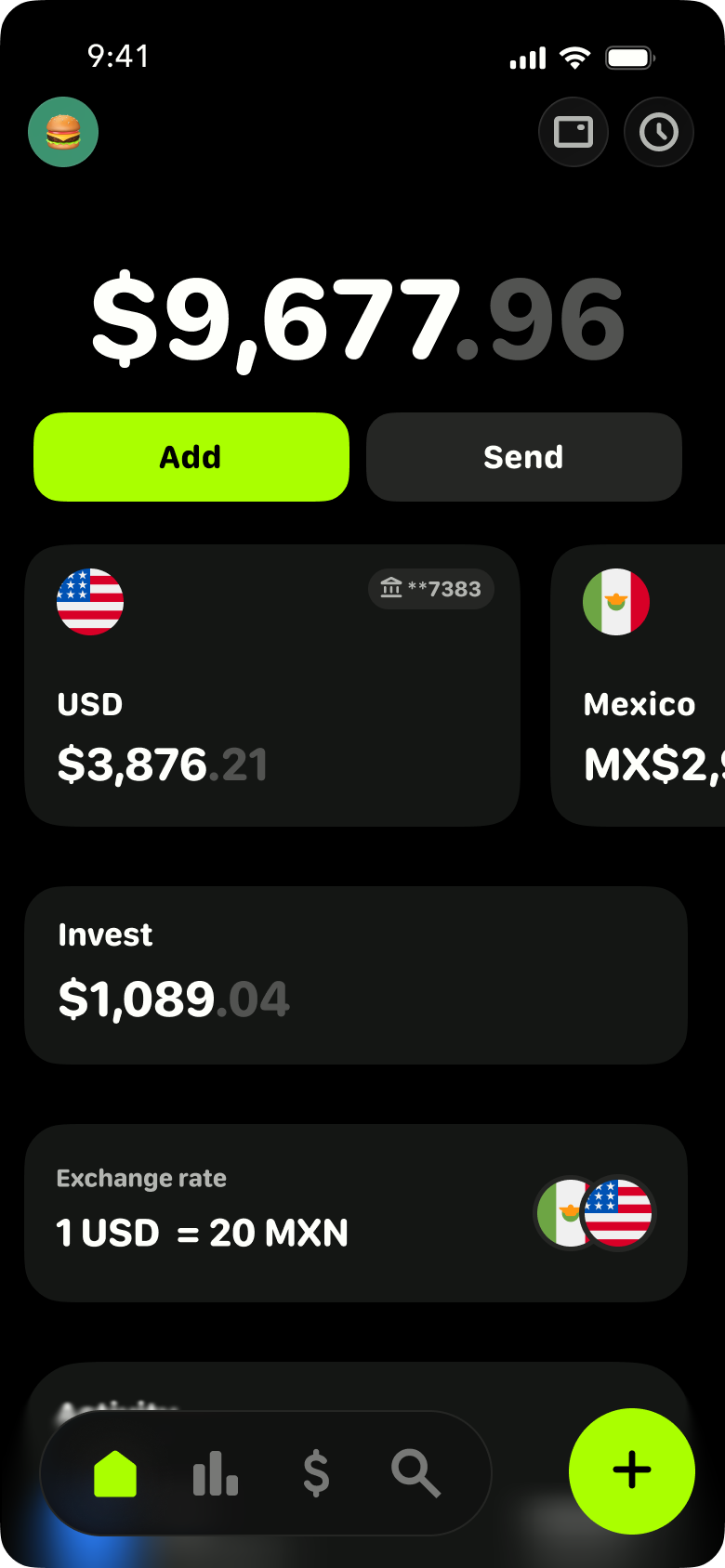
Your own USD, EUR, GBP account details in 150+ countries.
Payouts cost 50 to 80% less than bank rails.
Rates and terms are shown in the app.
While other apps are still "processing".
100% self-custody. Your keys, your money. Built by bitcoiners.
Who holds the money. Wise keeps your balance in its ledger, which is why it can freeze or close accounts during reviews. Avvio is self-custodial: you hold your money, so we can't freeze it. Payouts run on stablecoin rails, settling in seconds at 50 to 80% below bank cost.
No. Avvio never holds your funds, so freezing them isn't something we're able to do. Your keys stay on your device, secured with Face ID, with 2FA recovery if you lose your phone. Card and account services come through licensed partners and, like any regulated service, can be restricted, but your balance is yours alone.
For what it was built for, yes. You get the mid-market exchange rate, the one you see on Google, with an upfront fee instead of a spread buried in the rate. Wise has served millions of customers since 2011 and holds an "Excellent" rating on Trustpilot across hundreds of thousands of reviews. If your need is sending money from A to B in mainstream currencies, it is a strong default. This page is about a different problem: not what it costs to move your money, but what happens when the company holding it decides to stop.
Because it often legally can't, and the agent you message genuinely cannot look it up. Wise's help centre says plainly: "We can't tell you specific reasons why we closed your account, and Customer Support doesn't have the ability to view the reason." That isn't evasiveness for its own sake. Regulated money firms are often barred from explaining decisions that touch anti-money-laundering rules, a restriction known as "tipping off."
All of these are from Wise's own published pages. After a closure notice you usually have 90 days to move your balance out. Refunds vary sharply by method: 3 to 10 working days back to a card, 2 to 3 working days by bank or wire transfer, and up to 90 working days for ACH bank debit while due diligence checks run. That last figure is roughly four and a half months of calendar time, and the checks have to finish before the clock even starts. Meanwhile the account is usually half-alive; you can typically still withdraw and spend, but not add or receive money, so client payments bounce or sit in limbo until you redirect your invoices. If you are in this right now, we wrote the step-by-step version: what to do when Wise deactivates your account, including how to appeal and how to escalate to an ombudsman. Most Wise customers never see any of this, but the structural point stands whichever provider you choose: it is only possible because somebody else is holding your money.
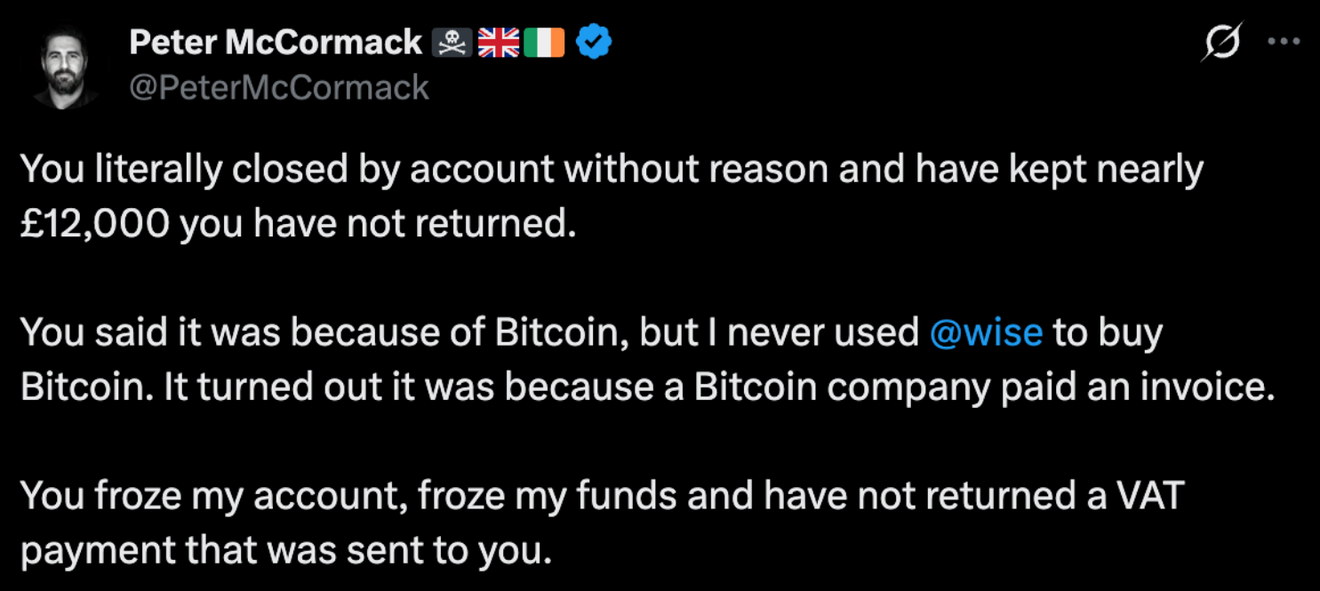
Yes. Wise's terms allow it to deactivate or close accounts, and its acceptable use policy restricts crypto activity. Its own help pages say "We can't tell you specific reasons why we closed your account," and that refunds by ACH bank debit can take up to 90 working days while due diligence checks run. If it happened to you, tell us what happened.
Self-custody removes one specific failure mode completely: nobody, including us, can freeze your balance while a review runs, and if Avvio shut down tomorrow your money would still be yours. That is not a promise you have to take on trust, it is an architecture you can verify, because the ledger is on-chain. Our explainer covers the mechanics: what self-custody actually means. What it doesn't remove: the account services wrapped around that wallet, including card and fiat rails, come through licensed partners and, like every regulated financial service, can be restricted. It also moves real responsibility onto you, because protecting your access is your job, not ours. And it does nothing whatsoever about money currently stuck at another provider; if Wise is holding your balance today, only Wise's process can release it. Anyone telling you self-custody solves all of that is selling you something. It solves one thing, completely.
If you are switching by choice rather than in a crisis, do it in an order that never leaves you without a way to get paid. Open the new account and complete verification before you touch anything else. Redirect one income source, not all of them, and confirm the first payment lands as expected. Then move the rest, leaving a working balance wherever it currently sits until the new details have been paid into at least once, and keep both accounts open through one full billing cycle; a subscription you forgot about will find you. If crypto is part of how you earn, read what Wise's crypto rules actually say first, because the boundary between what is allowed on the card and what is not allowed from the account catches people out constantly. And if you want the side-by-side rather than the argument, we wrote Avvio vs Wise with the concessions included.
About two minutes. Download Avvio on iOS or Android, create your account, and you have USD, EUR, and GBP access wherever you are.
USD, EUR, and GBP accounts in 150+ countries, payouts that settle in seconds at 50 to 80% below bank rails, and investing in US stocks, Bitcoin, and gold from the same app. All of it self-custody, so your money stays yours.